
Hormonal Hair Loss Treatment in Women: Causes, Symptoms & Solutions
Introduction
Hair fall is common. But when hair shedding becomes excessive, patchy, or progressive thinning appears especially on the crown and front scalp, the reason is often hormonal imbalance. Many women ignore this condition thinking it is due to stress, water change, or hair oil. In reality, hormonal hair loss is a medical condition that needs proper diagnosis and proper Hormonal Hair Loss Treatment under a qualified dermatologist for effective and long-term hair regrowth.
At Dew Clinic Chennai, dermatologists frequently treat women who experience persistent hair thinning despite using shampoos, serums, and home remedies. Understanding the root cause is the first step toward successful hair regrowth.
What is Hormonal Hair Loss?
Hormonal hair loss happens when internal hormones disturb the hair growth cycle. Normally hair grows in 3 stages:
- Growth phase (Anagen)
- Resting phase (Telogen)
- Shedding phase
When hormones fluctuate, the growth phase shortens and the shedding phase increases. This leads to thinner hair strands, slow regrowth, and visible scalp.
This condition is medically called Female Pattern Hair Loss (FPHL) or Androgenic Alopecia in Women.
Main Causes of Hormonal Hair Loss in Women
1. PCOS (Polycystic Ovary Syndrome)
The most common cause in young women.
PCOS increases androgen hormones which shrink hair follicles.
Signs:
- Hair thinning on crown
- Facial hair growth
- Irregular periods
- Acne
2. Thyroid Disorders
Both hypothyroidism and hyperthyroidism can trigger sudden hair fall.
You may notice:
- Diffuse hair shedding
- Dry hair texture
- Eyebrow thinning
3. Pregnancy & Postpartum Changes
After delivery, estrogen levels drop rapidly. This pushes many hair follicles into shedding phase, causing severe hair fall 2 to 4 months after childbirth.
4. Menopause
During menopause, estrogen decreases and androgen effect increases. Hair becomes thin, weak and loses volume.
5. Stress Hormones (Cortisol)
Chronic stress elevates cortisol levels which interrupts hair growth cycle and causes continuous shedding.
Symptoms You Should Not Ignore
Hormonal hair loss is gradual. Many women notice it very late.
Watch for these warning signs:
- Widening hair partition line
- Thinning at crown area
- Visible scalp under bright light
- Reduced ponytail volume
- Excessive hair on pillow and comb
- Slow hair regrowth
- Hair becoming fine and weak
If these signs are present for more than 2–3 months, you need medical evaluation.
Diagnosis: Why Clinical Assessment is Important
Hair fall treatment is not just about applying serum. The root cause lies inside the body.
At Dew Clinic Chennai, dermatologists evaluate:
- Hormone profile test
- Thyroid levels
- PCOS screening
- Vitamin deficiency
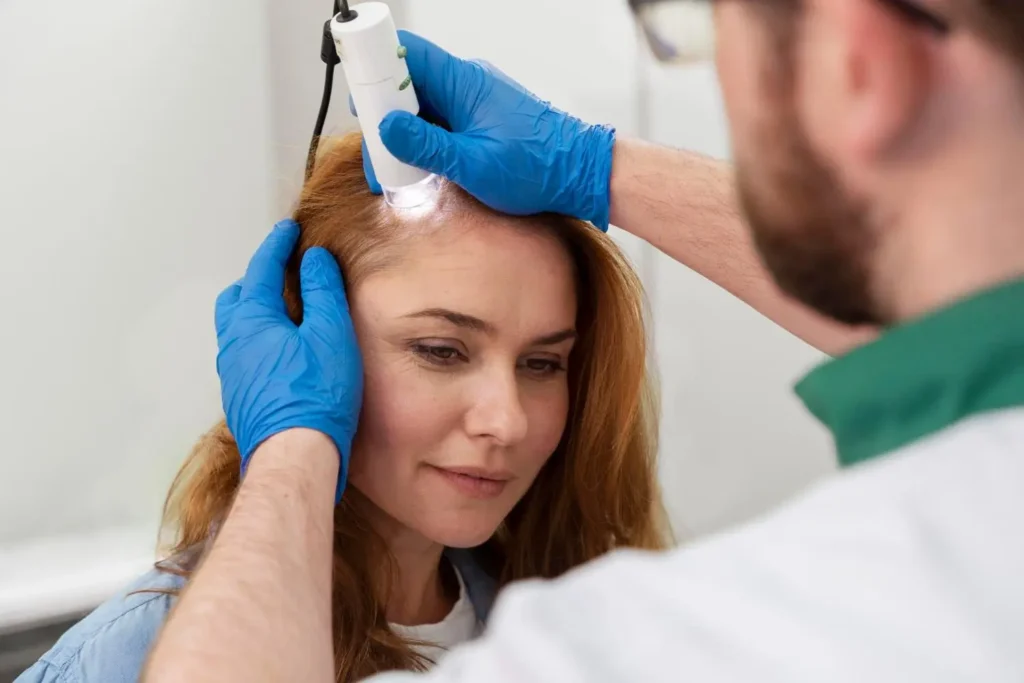
- Scalp examination (Trichoscopy)
Many women who also suffer from skin darkening due to hormonal imbalance may simultaneously require care for pigmentation. You can understand more about skin-related hormonal effects here: Pigmentation Treatment: Causes and Advanced Treatment Options
Hormonal imbalance often affects both skin and hair together.
Clinical Solutions for Hormonal Hair Loss
Home remedies alone cannot reverse hormonal hair thinning. Clinical dermatology treatments are necessary.
1. Medical Therapy
Doctors prescribe medications that:
- Control androgen hormones
- Stimulate follicles
- Increase growth phase
- Reduce shedding
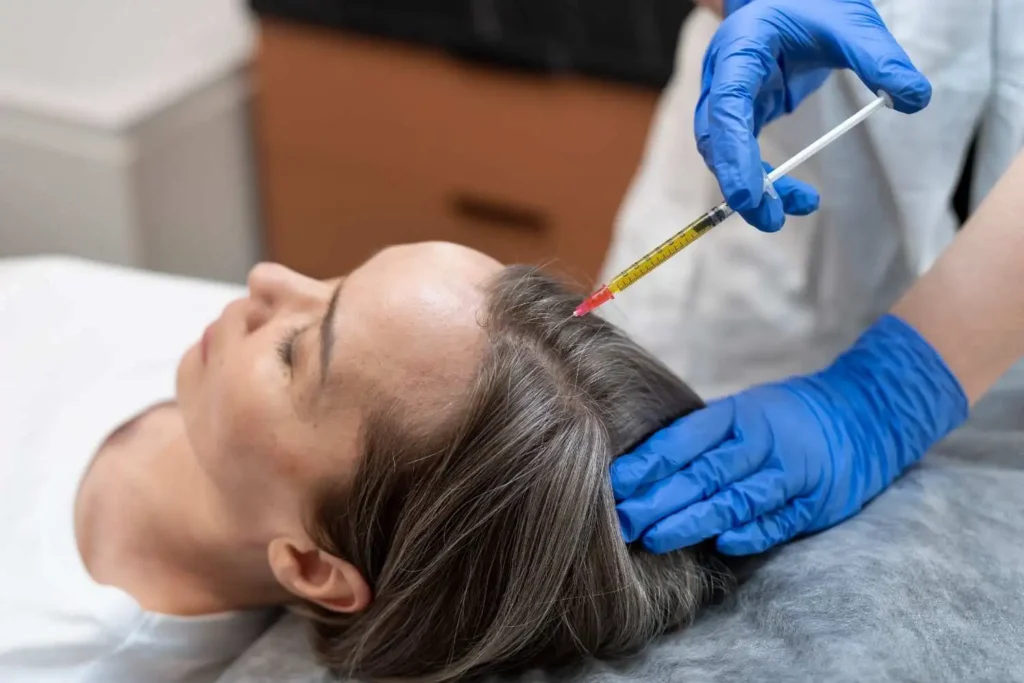
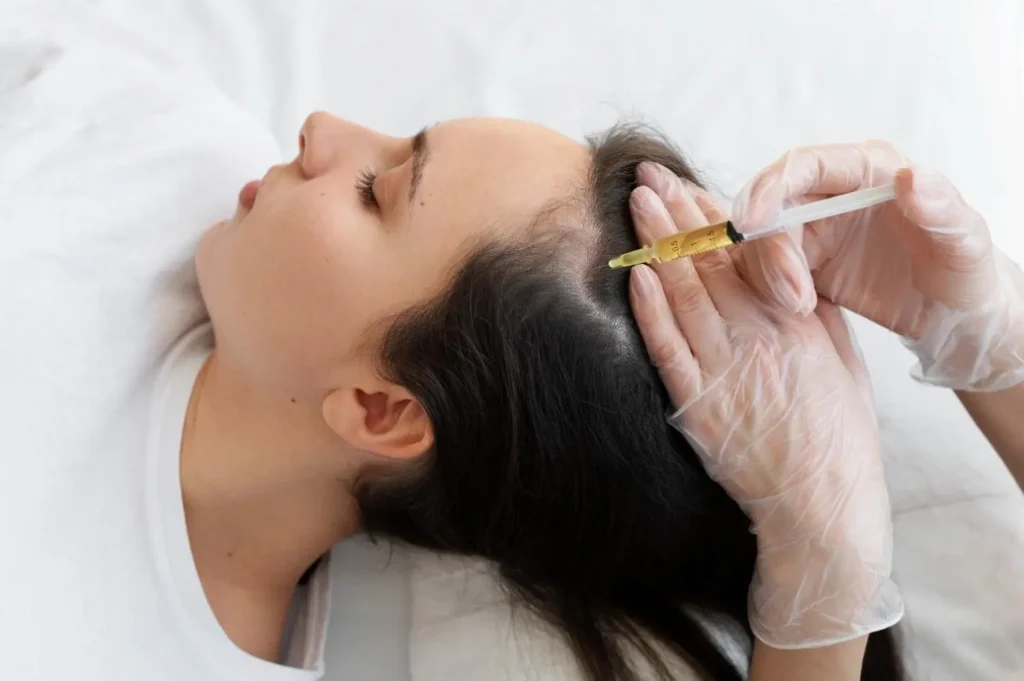
2. PRP (Platelet Rich Plasma) Hair Treatment
One of the most effective non-surgical treatments.
How it works:
- Patient’s own blood is processed
- Growth factors extracted
- Injected into scalp
Benefits:
- Reactivates sleeping follicles
- Improves hair thickness
- Reduces hair fall
- Natural regrowth
3. Growth Factor Therapy
Advanced regenerative treatment that boosts follicle activity and improves density.
4. Nutritional Correction
Iron deficiency, Vitamin D deficiency, and B12 deficiency commonly worsen hormonal hair loss. Correcting them significantly improves hair recovery.
5. Lifestyle & Hormone Regulation
Dermatologists also guide:
- PCOS diet plan
- Stress management
- Sleep correction
Conditions That Worsen Hair Loss
Hormonal imbalance affects overall health. Sometimes patients focus only on hair fall but ignore other health problems.
For example, chronic infections or untreated dental inflammation can increase body stress hormones and indirectly worsen hair fall. Understanding oral health myths and facts can help overall wellness: Root Canal Treatment in Chennai: Myths vs Facts Explained
Body health and hair health are interconnected.
When Should You See a Dermatologist?
Consult immediately if:
- Hair fall lasts more than 8 weeks
- Family history of baldness
- Period irregularity with hair thinning
- Acne + hair fall together
- Hair not improving despite oils and supplements
Early treatment gives the best regrowth results. Late-stage follicle damage becomes difficult to reverse.
Prevention Tips
You can slow hormonal hair loss with proper care:
- Avoid crash dieting
- Maintain iron-rich diet
- Manage stress
- Do not overuse chemical treatments
- Avoid tight hairstyles
- Sleep 7–8 hours daily
- Seek early medical advice
Conclusion
Hormonal hair loss in women is very common but highly treatable. The biggest mistake women make is delaying medical consultation and relying only on oils, shampoos, and home remedies. Since the cause is internal, treatment must also be medical.
With proper diagnosis, hormone correction, and advanced therapies like PRP, hair regrowth is achievable. At Dew Clinic Chennai, personalized dermatology care helps identify the exact cause and provide targeted treatment plans for long-term hair recovery.
If you are noticing progressive thinning or widening partition, do not wait until the scalp becomes visible. Early treatment can completely restore hair density and confidence.
Frequently Asked Questions
1. Is hormonal hair loss permanent?
No. If treated early, hair follicles can be reactivated and hair regrowth is possible.
2. Can PCOS hair loss grow back?
Yes. With hormone control and clinical treatments like PRP, significant regrowth occurs.
3. Which doctor should I consult for female hair loss?
A qualified dermatologist or trichologist specializing in hair disorders.
4. How many PRP sessions are required?
Usually 4-6 sessions depending on severity.
5. Do hair oils cure hormonal hair fall?
No. Oils improve hair texture but cannot correct hormonal imbalance.